PROACTIVE TMH3-2396-001 Patient Lift Control
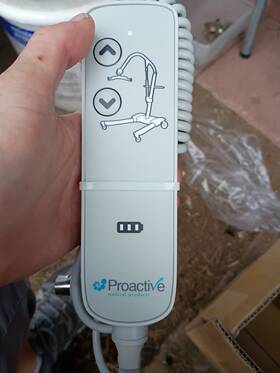
( Brand: Proactive ), ( Manufacturer Part Number: TMH3-2396-001 ), ( Type: Hand Control ), ( California Prop 65 Warning: Cancer And Reproductive Harm )
Review PROACTIVE Patient Lift Hand Control
The **Proactive TMH3-2396-001 Patient Lift Control** is a sophisticated, high-performance control module designed specifically for advanced patient lift systems, ensuring seamless integration with motorized hoists, winches, and hydraulic lifts in clinical, home care, and rehabilitation settings. Engineered with precision and reliability in mind, this control unit features a robust, IP-rated enclosure that protects against dust, moisture, and accidental damage, making it ideal for demanding environments where hygiene and durability are paramount. At its core, the TMH3-2396-001 incorporates a user-friendly touchscreen interface with intuitive navigation, allowing caregivers and medical professionals to effortlessly operate lift functions such as patient positioning, height adjustment, and secure attachment. The system supports multiple control modes, including manual, semi-automatic, and fully automated operation, enabling customizable workflows tailored to individual patient needs while minimizing operator fatigue.
One of the standout features of this control unit is its advanced safety protocol suite, which includes built-in overload protection, emergency stop functionality, and automatic braking systems to prevent sudden movements or equipment failure. The TMH3-2396-001 also integrates with wireless remote controls and voice-activated assistants, enhancing accessibility for users with limited mobility or dexterity. Its compatibility with a wide range of lift attachments such as slings, transfer boards, and ceiling tracks ensures versatility across different clinical applications, from hospital wards and nursing homes to home health settings. The control module is equipped with real-time diagnostics and self-monitoring capabilities, providing immediate feedback on system status, maintenance alerts, and usage logs to streamline upkeep and extend the lifespan of the equipment.
Built on modular architecture, the TMH3-2396-001 allows for easy upgrades and customization, accommodating future advancements in patient lift technology without requiring a complete system overhaul. Its compact yet sturdy design ensures minimal workspace disruption while maintaining optimal performance, and the unit s energy-efficient motor control reduces operational costs without compromising power or responsiveness. Whether deployed in a fast-paced acute care facility or a long-term care residence, this patient lift control exemplifies a blend of innovation, safety, and ergonomic design, empowering caregivers to deliver compassionate, efficient, and patient-centered assistance with confidence.
### **Pros and Cons of buying a Proactive TMH3-2396-001 Patient Lift Control**
#### **Pros:**1. **Enhanced Safety for Patients and Caregivers** The device is designed to reduce manual lifting, lowering the risk of injuries for both patients (especially those with limited mobility) and healthcare workers. This aligns with workplace safety regulations and reduces liability risks for facilities.
2. **Improved Mobility and Independence** Patients with mobility impairments (e.g., post-surgery, spinal injuries, or neurological conditions) can regain some autonomy in movement, reducing dependence on staff for transfers between beds, wheelchairs, and toilets.
3. **Durability and Reliability** The TMH3-2396-001 appears to be a commercial-grade product, likely built to withstand frequent use in healthcare settings. High-quality construction suggests longevity, reducing the need for frequent replacements or repairs.
4. **Ease of Use and Ergonomics** The control system is likely designed with intuitive operation in mind, allowing caregivers to perform lifts efficiently without excessive training. Some models in this category include features like one-handed operation or voice activation for added convenience.
5. **Compliance with Healthcare Standards** Patient lifts must meet strict safety and regulatory standards (e.g., FDA, ISO, or regional healthcare guidelines). This model may be certified for use in hospitals, nursing homes, or home care settings, ensuring legal and operational compliance.
6. **Reduced Staff Burnout** Manual lifting is a leading cause of musculoskeletal injuries among healthcare workers. Automating this process can improve job satisfaction and retention by minimizing physical strain.
7. **Versatility** The device may be compatible with various patient lift systems (e.g., ceiling tracks, mobile lifts, or stand-alone units), offering flexibility in different care environments.
8. **Cost-Effective in the Long Run** While the initial purchase price may be higher than manual transfer aids, the reduction in worker s compensation claims, staff turnover, and patient injuries can offset costs over time.
---
#### **Cons:**1. **High Upfront Cost** Patient lift controls and systems are expensive investments, especially for small clinics, home care agencies, or budget-constrained facilities. The TMH3-2396-001 may require significant capital expenditure or financing.
2. **Maintenance and Repair Costs** Like any mechanical or electronic device, patient lifts require regular maintenance (e.g., lubrication, battery checks, software updates). Downtime for repairs could disrupt care operations, and repair costs may add up over time.
3. **Training Requirements** Staff must be properly trained to operate the lift safely. Poor training could lead to misuse, increasing the risk of accidents (e.g., improper positioning, sudden movements, or equipment failure).
4. **Space and Installation Constraints** Some patient lifts, especially ceiling-mounted systems, require structural modifications or dedicated space. Mobile lifts may need charging stations or storage areas, which could be impractical in tight facilities.
5. **Battery Dependency (If Applicable)** If the TMH3-2396-001 uses rechargeable batteries, facilities must manage battery life, charging schedules, and backup power sources to avoid operational interruptions during outages.
6. **Limited Portability** Ceiling-tracked lifts are fixed in place, while mobile lifts may be bulky and difficult to move between rooms. This could be a drawback in settings with limited space or frequent patient relocations.
7. **Potential for Malfunction** Electronic or hydraulic failures, sensor malfunctions, or software glitches could occur, posing risks if the lift fails mid-use. Redundant safety features (e.g., emergency stop buttons) are essential but may add complexity.
8. **Resistance to Change** Some healthcare workers may be hesitant to adopt new technology, preferring familiar manual methods. Overcoming this resistance requires strong leadership and change management strategies.
9. **Compatibility Issues** If the lift is part of a larger system (e.g., integrated with electronic health records or monitoring software), compatibility with existing infrastructure may be a concern. Customization or additional software licenses could incur extra costs.
10. **Environmental Considerations** Disposal of old lifts or components may have environmental implications, though many modern models are designed for recyclability.
---
### **Conclusion**
The **Proactive TMH3-2396-001 Patient Lift Control** is a sophisticated tool that significantly enhances patient safety and caregiver efficiency in healthcare settings. Its primary strengths lie in reducing injury risks, improving mobility for patients, and aligning with regulatory standards. However, the high initial cost, maintenance demands, and potential logistical challenges must be carefully considered before purchase.
For **hospitals, large nursing homes, or specialized care facilities** with the budget and infrastructure to support such equipment, this lift is a worthwhile investment. It can lead to long-term savings by reducing workplace injuries, improving care quality, and increasing staff productivity.
For **small clinics, home care agencies, or budget-limited settings**, the cost and complexity may outweigh the benefits. In such cases, alternative solutions such as manual transfer aids, simpler hydraulic lifts, or shared-use systems might be more practical.
---
### **Recommendation**
**Buy the TMH3-2396-001 if:**- Your facility has a **dedicated budget** for patient safety equipment and can justify the cost through reduced injury claims and improved care.
- You operate in a **high-volume or high-risk environment** (e.g., rehabilitation centers, post-surgical wards, or facilities with elderly or immobile patients).
- Your staff can undergo **comprehensive training** to ensure safe and efficient operation.
- You have **space and infrastructure** (e.g., ceiling mounts, charging stations) to support the lift system.
**Consider alternatives if:**- Your facility has **limited funding** or cannot afford the upfront and maintenance costs.
- Your patient population is **small or low-mobility**, making a simpler lift or manual aid more practical.
- Staff **resistance to new technology** is a significant concern without proper change management support.
**Next Steps Before Purchase:**1. **Request a demo or trial period** to assess usability and compatibility with your workflow.
2. **Consult with occupational health specialists** to evaluate injury risks in your specific setting.
3. **Compare total cost of ownership** (purchase price maintenance training potential downtime).
4. **Check warranty and support options** from the manufacturer to ensure reliable after-sales service.
5. **Ensure compliance** with local healthcare regulations and insurance requirements for patient lifts.
Ultimately, the TMH3-2396-001 is a **high-value investment for facilities prioritizing patient and worker safety**, but it is not a one-size-fits-all solution. A thorough needs assessment and cost-benefit analysis are essential before committing to the purchase.
Details:
Proactive Patient Lift Hand Control Tmh3-2396-001.
part #: tmh32396001 price
- $55.00
specifications mobilityequipget:
- brand: Proactive
- mpn: Tmh3-2396-001
- type: Hand Control
- california prop 65 warning: Cancer And Reproductive Harm
shipping mobilityequipget:
- type: Calculated
- service: USPS Ground Advantage
- transit: 7-10 Days
- carrier: USPS
- class: Standard
- cost: $8.46
general mobilityequipget:
- condition: New
- Medical Mobility > Mobility/Walking Equipment > Other Mobility Equipment
payments mobilityequipget:
- wallet: Google-pay
- other
- credit card: Diners-club
returns mobilityequipget:
- policy: No Returns
seller mobilityequipget:
- rating: 97.9%
- city: Elm Mott, Texas
- # reviews: 309
offer mobilityequipget:
- sold: 0
- quantity: 1
- availability: In Stock
- options: Ship-to-home
- started: March 25, 2026
Proactive TMH3-2396-001 Is Similar To:
- 30111 Proactive Medical Products Full Body Sling Patient Lift Size Medium (41% similar) Proactive medical products full body sling, patient lift sling, size medium. The Proactive medical products 30111 is in new condition...(February 28th, 2022)
- Proactive Lp-th10-pen Patient Lift Hand Control (79.2% similar) Proactive patient lift hand control LP-TH10-PEN...(April 9th, 2025)
- Proactive Medical 34500 Protekt 500 Electric Sit-to-stand Patient Lift Lbs (43.9% similar) With its exceptional weight capacity, ergonomic design, and advanced features, this patient lift is an invaluable asset for caregivers seeking to enhance the mobility well-being of their patients. This cutting-edge lift combines advanced technology with ergonomic design to ensure optimum comfort and...(May 18th, 2025)
- Proactive Medical 33600 Bariatric Power Electric Patient Lift 600 Lbs (50.8% similar) 6 point spreader bar allows for multiple sling options, safer patient handling and a wider range of transfers. Product specifications. Dual rear locking casters. Ergonomically designed foot pedal offers hands free opening of base which adjusts and locks easily for added security. Optional digital ...(May 18th, 2025)
- Proactive Medical 33500 Protekt 500 Power Electric Patient Lift (48.2% similar) Product specifications. Clip free sling hookups improve safety and reduce downtime. This electric-powered, high quality patient transfer system provides an efficient method to safely move patients, preventing and caregiver injuries. The high-performance protect 500 lift is the perfect blend of form ...(May 18th, 2025)
- Proactive Medical Lp-33500-sb 6 Point Spreader Bar For Protekt 500 600 Lift (38.1% similar) Weight capacity. 6 point spreader bar allows for multiple sling options, safer patient handling and a wider range of transfers. Proactive medical 6 point spreader bar for protect 500 / 600 lift...(May 18th, 2025)