EASYSTAND V2043739009 Bantam Leg Hip Knee Stand Supine
( Brand: Easystand ), ( Manufacturer Part Number: V2043739009 ), ( Power Source: Battery ), ( Color: Green ), ( Material: Aluminum, Aluminum Alloy, Plastic, Rubber ), ( Suitable For: Indoor, Outdoor ), ( Type: Knee Stand ), ( Unit Type: Unit ), ( Labels Certifications: Ada Compliant ), ( Item Height: 44 In ), ( Maximum Load Capacity: 100 Lb ), ( Age Group: Child ), ( Features: Adjustable Footrests, Adjustable Handles, Adjustable Height, Backrest, Commercial, Compact, Cup Holder, Detachable Footrests, Ergonomic, Handgrip, Heavy Duty, Indoor, Knee Pad, Outdoor, Padded Armrest, Reclining, Safety Belt, Tilt-in-space, Tray, Wheel Locks, With Wheels ), ( Item Width: 19 In ), ( Item Weight: 87 Lb )
Review EASYSTAND Bantam Extra Small Leg Hip Knee Stand Supine Support Unused
The **EasyStand V2043739009 Bantam Leg Hip Knee Stand for Supine Positioning** is a meticulously engineered, space-saving medical mobility aid designed to enhance patient comfort, independence, and safety during transfers, repositioning, and daily activities while lying in a supine (lying on the back) position. This compact yet sturdy stand is part of the Bantam series, renowned for its lightweight yet robust construction, making it an ideal solution for home care, rehabilitation centers, and clinical settings where maneuverability and ease of use are paramount. Crafted with a focus on ergonomic efficiency, the EasyStand features a sleek, modular design that allows for quick and secure attachment to a patient s legs, hips, and knees, providing stable support without the bulkiness of traditional standing frames. Its adjustable straps and padded interfaces ensure a snug, customizable fit, reducing the risk of discomfort or skin irritation while enabling patients to transition from a lying position to a seated or standing posture with minimal assistance. The stand s reinforced aluminum frame is both durable and corrosion-resistant, ensuring longevity even with frequent use, while its foldable design allows for easy storage in tight spaces, such as under a bed or in a closet. Whether assisting a patient with limited mobility in transferring to a wheelchair, reaching for objects on a bedside table, or simply improving circulation through gentle movement, the Bantam Leg Hip Knee Stand offers a reliable, low-profile alternative to more cumbersome mobility devices. Its intuitive operation combined with the ability to adjust height and angle makes it particularly well-suited for caregivers, physical therapists, and individuals seeking to regain confidence in their mobility without the need for extensive physical exertion. By promoting active participation in daily routines, this stand not only aids in physical rehabilitation but also fosters a sense of autonomy and dignity for users.
The **EasyStand V2043739009 Bantam Leg Hip Knee Stand (Supine)** is a mobility aid designed to assist individuals in transitioning between sitting and standing positions, particularly for those with limited mobility, post-surgery recovery, or chronic conditions like arthritis. Below is a detailed analysis of its pros and cons, followed by a conclusion and recommendation.
---
### **Pros**
1. **Assists with Mobility and Independence**
The stand is specifically designed to help users move from a supine (lying down) position to a seated or standing position with minimal effort. This can be particularly beneficial for individuals who struggle with transfers due to weakness, pain, or balance issues. By reducing the need for manual lifting or assistance from caregivers, it promotes greater independence.
2. **Adjustable and Versatile Design**
The Bantam model appears to offer adjustable features, such as height and angle settings, which can accommodate users of varying sizes and mobility needs. This adaptability ensures that the stand can be tailored to the user s specific requirements, enhancing comfort and effectiveness.
3. **Reduces Strain on Caregivers**
For caregivers, assisting a person with transfers can be physically demanding and risky, especially if the individual is large or has limited mobility. The EasyStand can alleviate some of this burden by providing mechanical support during transfers, reducing the risk of caregiver injury.
4. **Supports Post-Surgical or Rehabilitation Use**
After surgeries such as hip replacements, knee replacements, or spinal procedures, patients often require assistance to regain mobility safely. The supine-to-seated function of this stand can help patients gradually rebuild strength and confidence in their movements under controlled conditions.
5. **Promotes Active Participation in Daily Activities**
By enabling smoother transitions, the stand can encourage users to engage more actively in daily routines, such as getting out of bed, moving to a wheelchair, or transferring to a chair. This can improve overall physical and mental well-being.
6. **Compact and Portable (Likely)**
Many mobility aids in this category are designed to be portable, allowing users to move the stand between different locations (e.g., bed to wheelchair). While specific dimensions aren t provided, the "Bantam" designation suggests a smaller, more maneuverable size compared to bulkier models.
7. **Encourages Proper Body Mechanics**
The stand likely guides users through movements that promote proper alignment and reduce the risk of strain or injury during transfers. This can be particularly important for individuals with conditions that affect posture or balance.
---
### **Cons**
1. **Limited to Specific User Needs**
The stand is optimized for supine-to-seated transfers and may not be suitable for all mobility challenges. For example, users who require assistance with standing from a seated position (e.g., from a chair to a standing position) may find it less helpful. Additionally, individuals with severe cognitive impairments or those who cannot follow instructions may struggle to use it effectively.
2. **Potential for Over-Reliance**
While the stand promotes independence, some users might become overly dependent on it, leading to weakened muscles or reduced mobility over time. It s important to use such aids as a temporary or supplementary tool rather than a permanent crutch.
3. **Cost**
Mobility aids like this one can be expensive, especially if not covered by insurance or medical reimbursement programs. The cost may deter some users or their families from purchasing it, particularly if they are already managing other medical expenses.
4. **Setup and Learning Curve**
Using the stand effectively may require initial training to ensure proper setup and technique. Caregivers or healthcare professionals may need to assist in the early stages, which could add to the overall effort required to implement the aid.
5. **Durability and Maintenance**
Frequent use can lead to wear and tear on the stand s components, such as the hydraulic or mechanical parts responsible for lifting. Regular maintenance or eventual replacement may be necessary, adding to the long-term cost.
6. **Space Requirements**
While the Bantam model is likely more compact than larger stands, it may still require adequate space around the bed or chair for safe and effective use. Users in tight living spaces may find it challenging to maneuver.
7. **Not Suitable for All Weight Limits**
Mobility aids have weight limits, and while the Bantam model is designed for lighter users (as suggested by the "Bantam" name), heavier individuals may exceed these limits. Users should verify the weight capacity before purchasing to ensure safety.
8. **Potential for Misuse or Accidents**
If not used correctly, the stand could pose risks such as falls or improper alignment during transfers. Users or caregivers must follow the manufacturer s instructions carefully to avoid accidents.
---
### **Conclusion**
The **EasyStand V2043739009 Bantam Leg Hip Knee Stand (Supine)** is a valuable tool for individuals seeking to improve their mobility, reduce caregiver strain, and regain independence after surgery or due to mobility limitations. Its adjustable design, portability, and focus on supine-to-seated transfers make it a practical choice for many users. However, it is not a one-size-fits-all solution and may not be suitable for everyone, particularly those with complex mobility needs or cognitive limitations. The cost, learning curve, and maintenance requirements are also factors to consider.
For users who fit the stand s intended use case such as post-surgical patients, individuals with arthritis, or those recovering from injuries the benefits often outweigh the drawbacks. It is essential to consult with a healthcare provider or physical therapist to determine if this specific model is appropriate and to receive guidance on proper usage.
---
### **Recommendation**
If you or a loved one require assistance with supine-to-seated transfers and meet the weight and mobility criteria for the Bantam model, this stand is **highly recommended** as a safe and effective aid. Prior to purchasing, consider the following steps:
1. **Consult a Healthcare Professional**: A physical therapist or doctor can assess whether the stand is suitable for your specific condition and provide guidance on proper use.
2. **Verify Weight and Size Compatibility**: Ensure the stand s weight limit and adjustability meet your needs. The Bantam model is likely best for lighter users, so check specifications carefully.
3. **Test Before Committing**: If possible, try the stand in a store or borrow one from a rehabilitation center to gauge its ease of use and comfort.
4. **Pair with Other Mobility Aids**: Depending on your needs, you may benefit from combining this stand with other aids, such as a transfer board or a standing frame, for comprehensive mobility support.
5. **Prioritize Safety**: Follow all manufacturer instructions and consider additional safety measures, such as non-slip mats or caregiver assistance during initial use.
For individuals who do not fit the Bantam model s criteria such as those requiring heavier-duty stands or those with more complex mobility needs exploring alternative options like the **EasyStand s larger models (e.g., the "Classic" series)** or other brands may be necessary. Ultimately, the goal should be to enhance mobility safely and sustainably, whether through this stand or another assistive device.
Details:
Mobile Footprint24 x38 61x97cm, Hand rim height from seat pivot 12.75 32cm, floor 31 79cm, height Tall pivot 16.75 43cm, floor 35 89cm, Wheelbase31 Fore/Aft Positional Range pivot 4.75 19 12-48cm, Standard Bantam w/ Weight70lbs32kg, Weight of Option25lbs1, Drive Chain Pensioning Method Tension Jack-Screw, Wheel Locks1/4 turn rotation to lock/unlock, Threshold height .75 Maximum2cm Maximum. It allows positioning from supine to sitting stand, offering flexibility support different transfer needs and strategies. Bantam Extra Small: Approximate height Range: 28 40 Tall: Weight Capacity: Up 50 lbs: Seat Depth Range from seat pivot with back: 7 12: Starting a seated position can provide natural transition standing; however, for some children, transfers may be more manageable. The Bantam line of standers are the only sit to stand that can combine option supine positioning create infinite possibilities from 90-90 sitting, fully vertical standing, full lying and anywhere in between. No other standers can provide the amount of positioning that is possible with EasyStand Bantam.
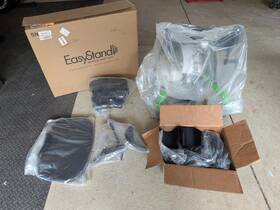
Shadow Tray Size21 x24 53x61cm, height from seat 7 10 18-25cm, Weight of Black Molded Assembly add 3lbs or 1.4kg for Acrylic 11.7lbs5.3kg, Chest Pad Depth Range0 11 0-28cm. The box is open but in brand new condition and has not been assembled. The Bantam supports multiple positioning approaches the accommodate individual needs. NEW and UNUSED.
part #: v2043739009 price
- $1650.00
specifications mobilityequipget:
- brand: Easystand
- mpn: V2043739009
- power source: Battery
- color: Green
- material: Aluminum, Aluminum Alloy, Plastic, Rubber
- suitable for: Indoor, Outdoor
- type: Knee Stand
- unit type: Unit
- labels certifications: Ada Compliant
- item height: 44 In
- maximum load capacity: 100 Lb
- age group: Child
- features: Adjustable Footrests, Adjustable Handles, Adjustable Height, Backrest, Commercial, Compact, Cup Holder, Detachable Footrests, Ergonomic, Handgrip, Heavy Duty, Indoor, Knee Pad, Outdoor, Padded Armrest, Reclining, Safety Belt, Tilt-in-space, Tray, Wheel Locks, With Wheels
- item width: 19 In
- item weight: 87 Lb
general mobilityequipget:
- Medical Mobility > Mobility/Walking Equipment > Other Mobility Equipment
- condition: Open box
payments mobilityequipget:
- wallet: Google-pay
- credit card: Diners-club
- other
shipping mobilityequipget:
- carrier: FedEx
- transit: 5-10 Days
- type: Calculated
- class: Standard
- service: FedEx Ground / FedEx Home Delivery
- cost: $121.42
seller mobilityequipget:
- # reviews: 1
- rating: 100.0%
- city: Howell, Michigan
offer mobilityequipget:
- started: May 23, 2026
- sold: 0
- quantity: 1
- options: Ship-to-home
- best offers: True
- availability: In Stock
returns mobilityequipget:
- policy: No Returns
Easystand V2043739009 Is Similar To:
- Bantom Easystand Bantam Sit To (37.8% similar) Easystand bantam sit to stand pediatric stander with tray and headrest as pictured. Stander is clean and in working order. Includes everything you see pictured...(August 25th, 2017)
- 7000 Magician Easystand Sit-to-stand Stander Special Needs Pediatric Youth Euc (32.7% similar) Retail was well over 2000 . The original manual is included. Price includes free ground shipping via ups to the lower 48 states only. Other than that there are only some minor marks normal to light use. Please look over the pictures. This chair is especially clean and in excellent shape. This model...(October 31st, 2015)
- V3013909019 Evolv Stander Easystand Standing Frame With Premium Upgrades Sit-to-stand Wheelchair (26% similar) It uniquely combines therapeutic standing and increased range of motion. Shows light wear from age previous use. Serial number v year condition used, in full working order. Satisfaction guarantee at able trader. When positioned correctly, the contoured seat provides a maximum over stretch for ...(August 7th, 2016)
- V3016231002 Evolv Stander Easystand Standing Frame With Shadow Upgrade Sit-to-stand Wheelchair (26.3% similar) Feel free to with any questions at, or visit us online at. Satisfaction guarantee at able trader. The able trader. The is some surface rust oxidation in areas. When positioned correctly, the contoured seat provides a maximum over stretch for various body types. The fabric on some corners of the knee...(August 12th, 2016)
- V3018567014 Evolv Stander Easystand Standing Frame Shadow Tray Sit-to-stand Wheelchair (25.1% similar) When positioned correctly, the contoured seat provides a maximum over stretch for various body types. Attached PDF docs Easystand evolve brochure evolve user manual evolve perfect fit video model info from the manufacturer Easystand evolve standing frame the Easystand evolve is designed for precise ...(October 21st, 2016)
- V3021707019 Evolv Stander Easystand Power Standing Frame With Shadow Tray Stand Wheelchair (30.4% similar) Satisfaction guarantee at able trader. The evolve also accommodates for hip and knee contractors through proper positioning of the footplates and knee pads. Serial number v model year condition in full working order. It uniquely combines therapeutic standing and increased range of motion. The able ...(September 4th, 2016)
- V4013524003 Evolv Shadow Stander Easystand Standing Frame Adult-large Sit-to-stand Wheelchair (26.4% similar) It uniquely combines therapeutic standing and increased range of motion. Shows visible wear fading scratches from age previous use. Feel free to with any questions at, or visit us online at. When positioned correctly, the contoured seat provides a maximum over stretch for various body types. The ...(July 23rd, 2016)
- V4014174017 Evolv Mobile Stander Easystand Power Standing Frame Large Roho Wheelchair Stand (27.9% similar) Satisfaction guarantee at able trader. The able trader. Feel free to with any questions at, or visit us online at. It uniquely combines therapeutic standing and increased range of motion. Includes battery pack and battery charger. The evolve also accommodates for hip and knee contractors through ...(June 23rd, 2016)
- V4014851020 Evolv Stander Easystand Standing Frame Adult-large Size Sit-to-stand Wheelchair (25.6% similar) Satisfaction guarantee at able trader. Easystand evolve standing frame the sit to stand therapeutic stander adult large model, with height adjustable work tray up for offer is an Easystand evolve standing frame. When positioned correctly, the contoured seat provides a maximum over stretch for ...(August 20th, 2016)
- V4016207015 Evolv Stander Easystand Standing Frame With Roho Cushion Upgrades Wheelchair Stand (27.4% similar) Serial number v year condition excellent, in full working order. Feel free to with any questions at, or visit us online at. Attached PDF docs Easystand evolve brochure evolve user manual evolve perfect fit video model info from the manufacturer Easystand evolve standing frame the Easystand evolve is...(August 13th, 2016)
- Pt50002 Bantam Easystand Sit To (25% similar) You're buying on this bantam Easystand, model PT50002, sit to stand, with tray in a size small. It will accommodate kids tall and up to 100 pounds. Please e-mail me with any questions. The tray has a couple scratches on it pic 9 and is missing one side hip pad 10 but in otherwise nice condition ...(January 17th, 2018)